
Rethinking the Acne Cascade: From Trigger to Clearance
The Problem With Antimicrobial-First Thinking
Acne vulgaris has long been framed as a bacterial disease. Cutibacterium acnes colonization is visible, testable, and treatable, and for decades, that made it the obvious target. But the clinical reality dermatologists encounter daily tells a more complicated story: patients who cycle through antibiotics without durable clearance, who develop resistance, who clear temporarily only to relapse, and are left managing hyperpigmentation and scarring long after active lesions resolve.
The antimicrobial-first model isn't wrong, it's just incomplete. And that incompleteness carries real clinical cost.
Acne as an Inflammatory Disease: What the Evidence Shows
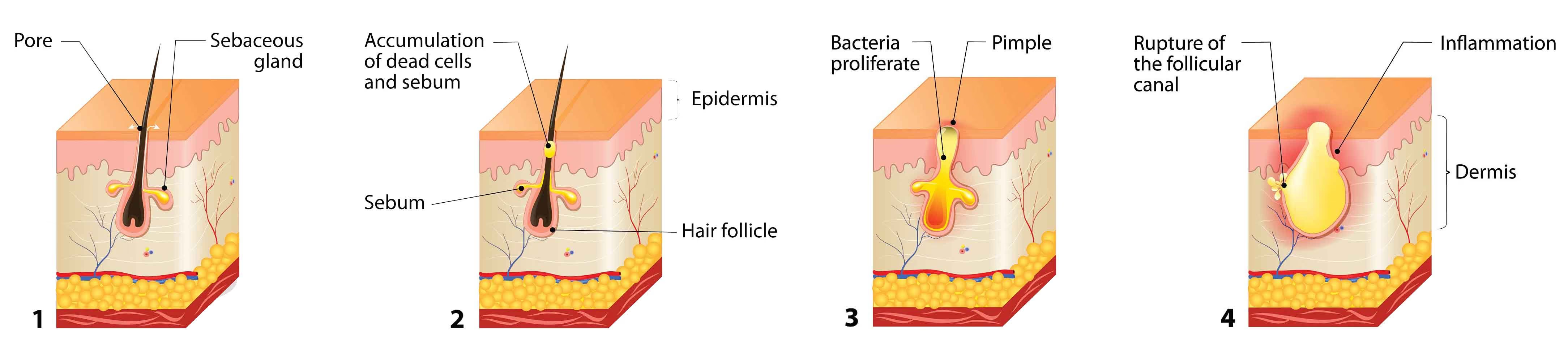
Current understanding of acne pathogenesis positions inflammation not as a downstream consequence of follicular colonization, but as an initiating event. Innate immune activation, toll-like receptor signaling, and pro-inflammatory cytokine release occur early in the formation of the microcomedone — before C. acnes proliferation reaches clinically significant levels.1,2
Therapeutically, if inflammation precedes and drives the cascade, then treatments targeting only the microbial load are intervening mid-stream. They may reduce lesion counts, but they don't address the environment that made those lesions possible in the first place.
Sebaceous hyperactivity, follicular hyperkeratinization, and cutaneous immune dysregulation collectively set the stage for the full clinical presentation of acne.3 Understanding where in the cascade a given therapy intervenes directly informs why some treatment strategies produce durable outcomes while others deliver only temporary suppression.
Acne formation
The Sequelae Problem: Why Clearance Isn't the Finish Line
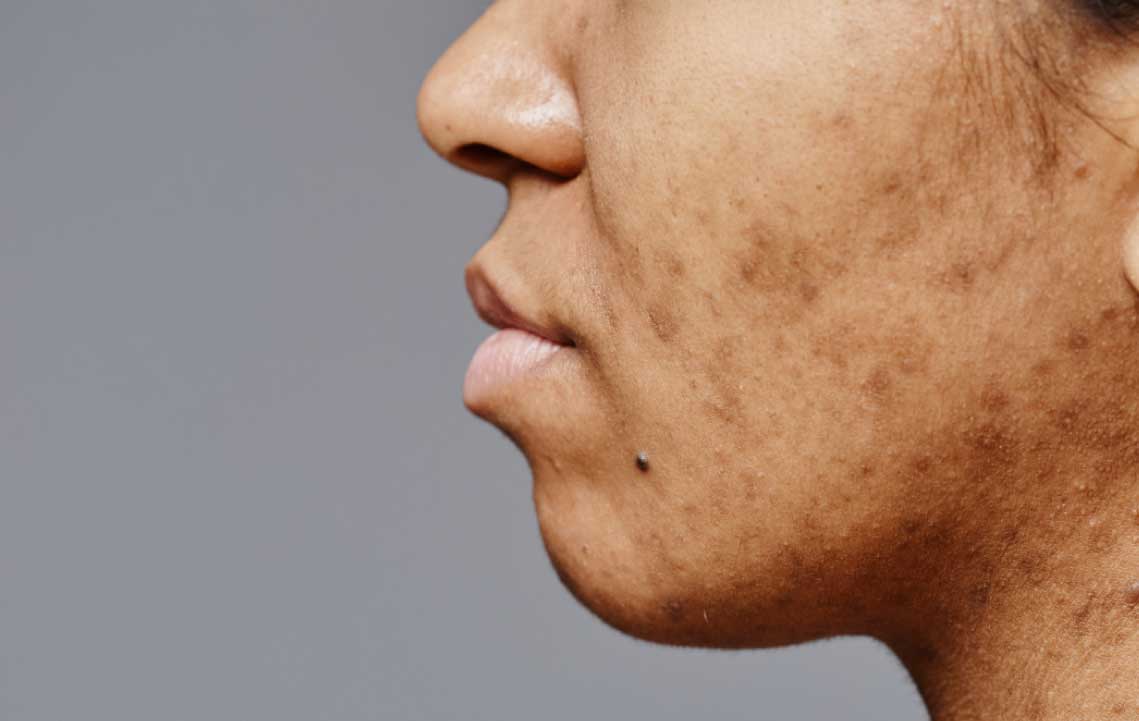
One of the most underappreciated dimensions of acne management is the burden that persists after active disease resolves. Post-inflammatory hyperpigmentation (PIH), post-inflammatory erythema (PIE), and atrophic scarring represent the downstream sequelae of repeated inflammatory injury — and for patients with Fitzpatrick skin types III through VI, PIH in particular can be as distressing as the acne itself.4
Research has confirmed the scope of this problem: among acne patients with darker skin types, more than half are presented with PIH, and in a significant proportion, pigmentary changes persist for more than a year after active disease resolves.5 Without intervention, resolution can take months to years, and in some of the worst cases are permanent.6
This creates a dual imperative for clinicians: clear active disease and prevent the inflammatory damage that produces lasting skin changes. An antimicrobial-focused protocol may accomplish the former while doing little to address the inflammatory mechanism responsible for the latter.
See how Aerolase Neo treats post-inflammatory hyperpigmentation, here.
A Cascade-Informed Framework for Treatment
Treating acne with the full pathophysiologic cascade in mind reorganizes clinical priorities in several important ways:
Intervene upstream, not just at the lesion level. Targeting sebaceous activity and the inflammatory microenvironment, rather than only surface bacteria, reduces the conditions that produce and sustain acne.
Treat consistently, not reactively. Inflammatory activity in acne-prone skin isn't limited to periods of visible breakout. Subclinical inflammation between flares contributes to cumulative tissue damage. Maintaining anti-inflammatory pressure continuously tends to produce more durable outcomes than treatment deployed only in response to active lesions.
Account for sequelae risk in the treatment plan. Particularly in patients with darker skin tones, every inflammatory event carries pigmentary risk. Therapies that reduce inflammatory burden at the tissue level offer a protective benefit that extends beyond lesion clearance alone.
Reduce systemic exposure where possible. Long-term antibiotic use carries well-documented risks including, resistance development, disruption of the gut and skin microbiome, and emerging questions around cumulative systemic effects.7,8 A framework that de-centers antimicrobials creates space for modalities that achieve comparable or superior outcomes without these trade-offs.
Targeting the Cascade With the Aerolase Neo Elite
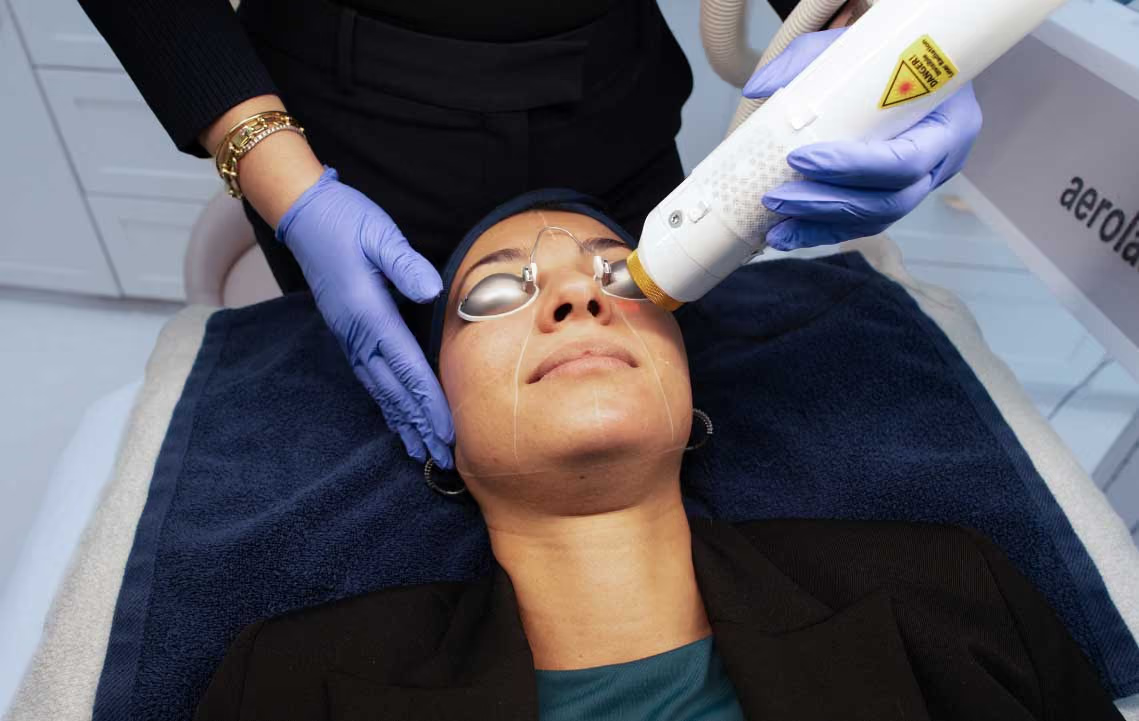
The Aerolase Neo Elite's 650-microsecond 1064nm Nd:YAG technology is built to act at multiple points in the acne cascade.
The 650-microsecond pulse duration delivers energy selectively to the pilosebaceous unit with minimal thermal diffusion to surrounding structures. This precision enables three simultaneous mechanisms:
- Suppression of cutaneous inflammation through selective photothermolysis of inflammatory mediators and immune cells within and around the follicle
- Reduction of sebaceous gland activity, addressing one of the primary upstream drivers of comedogenesis and bacterial proliferation
- Targeted reduction of C. acnes populations via photothermal destruction, without the systemic exposure or resistance risk associated with antibiotic therapy
Because the 1064nm wavelength is not preferentially absorbed by melanin, the Neo Elite treats effectively across all Fitzpatrick skin types including types V and VI — without the epidermal damage or PIH risk associated with shorter-wavelength devices. For practitioners treating acne in patients with skin of color, this represents a clinically meaningful advantage: effective, inflammation-targeted therapy that doesn't introduce new pigmentary risk.
The Neo Elite functions as both a monotherapy for appropriate candidates and as a combination platform — integrating with topical retinoids, hormonal therapies, or low-dose systemic agents to address acne through multiple simultaneous mechanisms. See the full acne treatment overview for clinical protocols, device specifications, and practice integration guidance.
Clinical Evidence
The evidence base for the 650-microsecond 1064nm platform in acne is well-established. A prospective study by Saedi et al., published in the Journal of Drugs in Dermatology, demonstrated a median lesion count reduction of 83.72% by the third treatment session across Fitzpatrick skin types I through VI — with results sustained at 86.67% at 90-day follow-up, and treatments completed without topical anesthetic.9 A double-blind, randomized controlled study by Kesty and Goldberg further confirmed a 271% improvement in Investigator's Global Assessment scores over sham treatment, along with reductions in both inflammatory lesion counts and sebum scores.10
See Dr. Nazanin Saedi’s Full Acne Study on Treatment of Mild to Severe Acne Vulgaris With a 650-Microsecond 1064-nm Nd:YAG Laser, here.
A More Complete Model of Acne Care
Durable acne clearance requires treating the disease, not just its most visible microbial component. The evidence increasingly supports inflammation, not C. acnes colonization as the primary driver of the acne cascade, and the sequelae burden on patients reflects what happens when that upstream activity goes unaddressed.
A cascade-informed approach reframes the therapeutic goal: not suppressing bacteria until a breakout resolves, but consistently reducing the inflammatory environment that drives comedogenesis, sustains active disease, and produces lasting skin damage. Technologies like the Aerolase Neo Elite was designed to act at the sebaceous, inflammatory, and microbial levels simultaneously. A proven, clinical tool that aligns with this more complete model of acne pathophysiology.
References
- Tanghetti EA. The role of inflammation in the pathology of acne. J Clin Aesthet Dermatol. 2013;6(9):27–35. PMC3780801.
- Zouboulis CC et al. A review of skin immune processes in acne. Front Immunol. 2023. PMID: 38193084. https://pubmed.ncbi.nlm.nih.gov/38193084/
- Kim J. Review of the innate immune response in acne vulgaris: activation of Toll-like receptor 2 in acne triggers inflammatory cytokine responses. Dermatology. 2005;211(3):193–198. PMID: 16205063. https://pubmed.ncbi.nlm.nih.gov/16205063/
- Shokeen D. Postinflammatory hyperpigmentation in patients with skin of color. Cutis. 2016;97(1):E9–E11. PMID: 26919365. https://pubmed.ncbi.nlm.nih.gov/26919365/
- Nouveau S et al. Frequency and characteristics of acne-related post-inflammatory hyperpigmentation. J Eur Acad Dermatol Venereol. 2016. PMID: 26813513. https://pubmed.ncbi.nlm.nih.gov/26813513/
- Davis EC, Callender VD. Postinflammatory hyperpigmentation. J Clin Aesthet Dermatol. 2010;3(7):20–31. PMID: 19706225. https://pubmed.ncbi.nlm.nih.gov/19706225/
- Humphrey S. Antibiotic resistance in acne treatment. JAMA Dermatol. 2012;148(1):86–89. PMID: 28636689. https://pubmed.ncbi.nlm.nih.gov/28636689/
- Barbieri JS et al. Is there an association between long-term antibiotics for acne and subsequent infection sequelae and antimicrobial resistance? BJGP Open. 2021;5(3). PMC8278499. https://www.ncbi.nlm.nih.gov/pmc/articles/PMC8278499/
- Saedi N, Griffin T, Kelly S. Treatment of mild to severe acne vulgaris with a 650-microsecond 1064-nm Nd:YAG laser. J Drugs Dermatol. 2021;20(9):1000–1004. https://jddonline.com/articles/treatment-of-mild-severe-acne-vulgaris-with-650-microsecond-1064-nm-ndyag-laser-S1545961624P8171X/
- Kesty K, Goldberg DJ. 650 μsec 1064nm Nd:YAG laser treatment of acne: a double-blind randomized control study. J Cosmet Dermatol. 2020;19(9):2295–2300. PMID: 32447830. https://onlinelibrary.wiley.com/doi/abs/10.1111/jocd.13480
.png)
1064 nm Nd vs. RF Microneedling: Which Is Right for Your Patients?
Compare 1064 nm Nd laser and RF microneedling for skin tightening, collagen remodeling, and skin of color. Explore safety, downtime, and benefits.
PIH Risk in Laser Treatment for Dark Skin
Post-inflammatory hyperpigmentation is the top risk in treating Fitzpatrick IV–VI skin. See how PIH shapes laser choice and why 1064 nm Nd:YAG is safer.
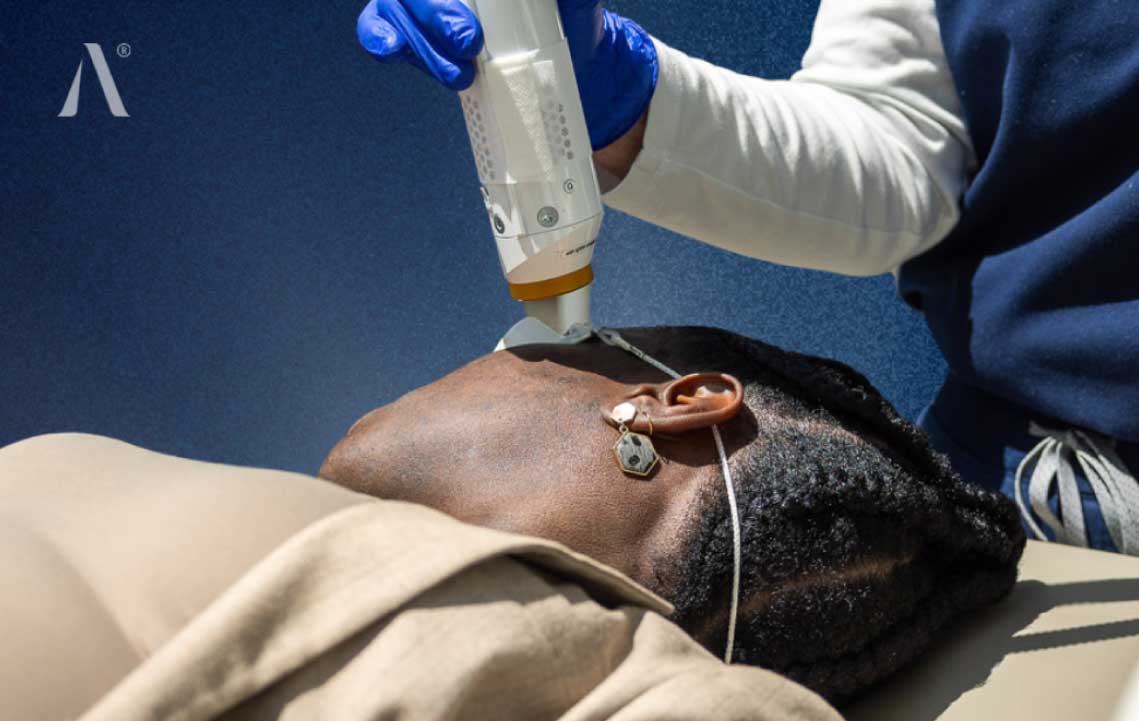
Aesthetic Laser Platform Guide for All Skin Types
How wavelength, pulse duration, and fluence determine laser safety across Fitzpatrick I to VI, plus how to verify a manufacturer's skin type claims.