
Pavel Efremkin of Aerolase On The Future Of Beauty

This interview was featured in Authority Magazine by Medium. View the full article, here.
As a part of our series about how technology will be changing the beauty industry over the next five years, we had the pleasure of interviewing Pavel Efremkin.
Pavel Efremkin, PhD, is Founder and CEO of Aerolase Corporation — the breakthrough laser technology brand pioneering the future of skin wellness with breakthrough laser technology designed for everyone, everywhere. Combining science-backed efficacy — clinically proven across 40+ peer-reviewed studies and trusted by top dermatologists — with precision and universal accessibility, Aerolase empowers healthcare providers to deliver FDA-cleared, safe, and effective treatments for all skin types and concerns. Their single device addresses 30+ medical and aesthetic indications with an average 87% clearance rate across conditions like acne, rosacea, PFB, and hyperpigmentation.
Thank you so much for joining us in this interview series! Before we dive in, our readers would love to learn a bit more about you. Can you tell us a story about what brought you to this specific career path?
I’m a scientist and physicist by training, so I came into the laser world focused on mechanism and engineering. But the more time I spent in clinical environments, the harder it became to ignore how poorly, for skin, the existing technology served everyone involved. Enormously expensive yet narrow application machines. Complex cooling systems, significant maintenance overhead, and subsystems are inherently prone to failure. Physicians work around their equipment as much as with it. Patients were tolerating recovery times that weren’t actually necessary, artifacts of how energy was being delivered, not inevitable consequences of treatment.
The whole category had calcified around early design decisions originating in heavy-industry laser architecture that nobody had seriously questioned for decades. That’s exactly the kind of problem that pulls me in. The challenge of addressing the vast unmet needs of healthcare practitioners and patients was the driving force behind my decision to start Aerolase.
Can you share the most interesting story that happened to you since you began your career?
It was at a plastic surgery conference early in my career. I stopped at a CO2 laser booth and met a woman who had been one of the first patients to undergo a full-face CO2 resurfacing procedure. The results were remarkable: years of aging, gone. But her recovery story stopped me cold. Six months of healing. Six months of looking in the mirror, not knowing if she’d ever look normal again. Anxiety, isolation, uncertainty. Here was a patient who got exactly what she came for, and it had still extracted an enormous toll. That moment crystallized everything. A technology that works shouldn’t make you question whether you made a terrible mistake. The laser of the future should be as good for the patient experience as it is for the clinical outcome. Everything we’ve built at Aerolase traces back to that woman at that booth.
Are you able to identify a “tipping point” in your career when you started to see success? Did you start doing anything different? Are there takeaways or lessons that others can learn from that?
There was a specific moment in the lab when we were testing pulse duration parameters, and I realized we’d been thinking about the problem backwards. Everyone in the field was trying to control damage after the fact: cooling systems, topical protectants, anesthetics, all of it. We asked: what if we delivered the energy so quickly that the surrounding tissue never had time to register it? That question led to our 650-microsecond pulse technology, and everything changed from there. The takeaway: the answer is usually hiding inside an assumption you haven’t questioned yet. Real breakthroughs don’t come from optimizing within the existing framework. They come from challenging it entirely.
None of us are able to achieve success without some help along the way. Is there a particular person to whom you are grateful who helped get you to where you are? Can you share a story about that?
I’d be doing a disservice to single out one person. None of what we’ve built would exist without the engineers. I can conceive of a solution, see it in the physics, map out what it should do and why, but translating that into something that works reliably in a clinical setting, on thousands of patients, is an entirely different discipline. I’ve been fortunate to work with a team that has taken every ambitious, sometimes impractical-sounding idea I’ve brought them and figured out how to make it real. The 650-microsecond pulse wasn’t a lucky accident. It was rigorous, painstaking engineering by people as committed to solving the problem as I was. I provide the vision. They make it true.
Ok super. Let’s now shift to the main part of our discussion. The beauty industry today has access to technology that was inconceivable only a short time ago. Can you tell us about the “cutting edge” technologies that you are working with or introducing? How do you think that will help people?
The core of what we do is energy delivery at a speed that fundamentally changes the clinical equation. Our laser pulses in 650 microseconds, faster than tissue can thermally respond, which means we can apply high power and reach deeper targets with precision and lack of pain while the surrounding skin stays protected. In practice, that eliminates trade-offs that have defined aesthetic laser treatment for decades: restricted skin types, certain prevalent conditions like acne poorly addressed by lasers and energy-based devices, extended recovery, and treating symptoms rather than the actual disease. We’re also expanding what’s treatable with that same underlying principle. The physics that protect skin during one application tend to unlock entirely new ones.
Keeping “Black Mirror” and the “Law of Unintended Consequences” in mind, can you see any potential drawbacks about this technology that people should think more deeply about?
The pace of innovation consistently outstrips the pace of education, and that’s a problem the industry hasn’t fully reckoned with. When technology evolves this quickly, manufacturers have a responsibility beyond building better devices: they have to invest equally in making sure clinicians understand what those devices can do and how to apply them optimally. At Aerolase, that’s a commitment we take seriously. But the concern I actually find more compelling is the flip side. We’re still dramatically underleveraging what laser technology can do in mainstream medicine. Conditions that dermatologists and primary care physicians manage every day, including chronic inflammatory skin diseases, vascular conditions, and scarring, have laser-based solutions that are clinically proven and still largely sitting on the sidelines of standard care. The real missed opportunity isn’t the misuse of this technology. It’s underuse.
Can you share 3 things that most excite you about the “beauty-tech” industry?
The demand for clinical proof is finally outpacing the demand for good marketing. Patients are savvier, and that’s making the whole field sharper. The conversation around inclusivity has moved from aspiration to expectation, forcing real innovation rather than just messaging. And the reframing of aesthetics as health: long-term skin health, inflammation management, aging on your own terms. That’s a far more interesting and meaningful space to be building in.
Can you share 3 things that most concern you about the industry? If you had the ability to implement 3 ways to reform or improve the industry, what would you suggest?
Overclaiming is endemic, and it makes every legitimate clinical result harder to believe. For one, companies overhype devices for treatments beyond the conditions they are designed for. In contrast, Aerolase has earned uncommon trust in the skin ecosystem by only promoting our lasers for treatment areas in which we have top efficacy or equal to the gold standard alternative, while delivering other advantages. Furthermore, the absence of standardized training means the same device can produce dramatically different outcomes depending on who’s behind it. And the industry’s addiction to trends: real skin health is slow and cumulative, and the business model often isn’t built to reward that kind of patience. If I could change three things: require clinical transparency as a baseline for market participation; create device-specific certification that has actual teeth; and start talking about skin health the way we talk about cardiovascular health, as something you build over a lifetime, not fix in a session.
You are an expert about beauty. Can you share 5 ideas that anyone can use “to feel beautiful”?
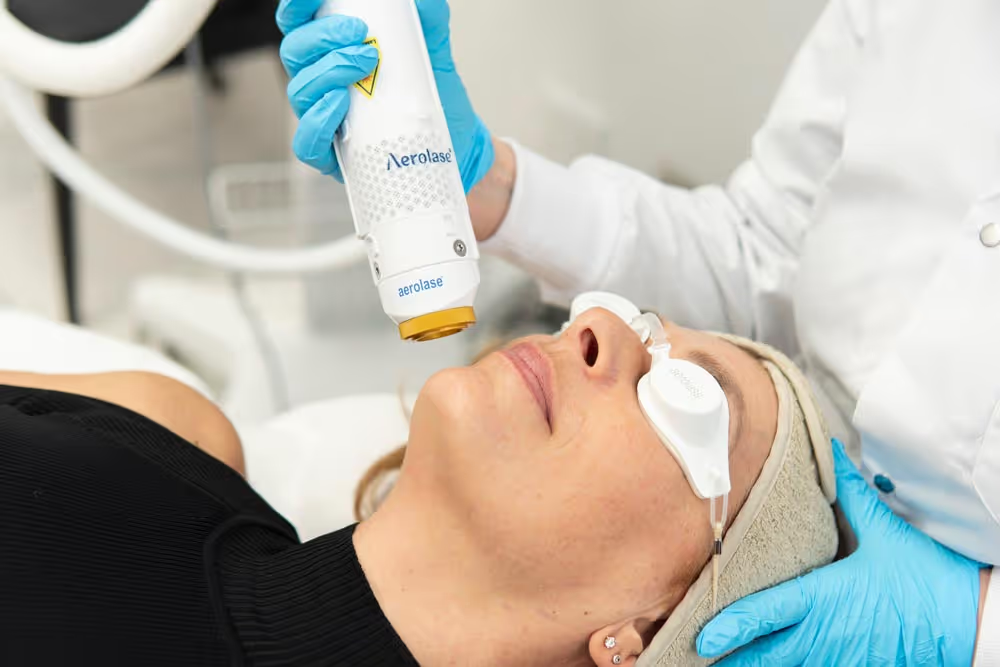
1. Consistency is the cheat code
Patients who tried everything and got nowhere, then committed to one simple protocol, transformed their skin over 18 months. The biology isn’t complicated. It just takes longer than we want it to.
2. Stop fighting your skin and start listening to it
Most of us are too busy throwing products at it to pay attention. When you slow down and respond to what’s actually happening, the results are usually surprising.
3. Address the root, not the surface
Redness, uneven tone, accelerated aging: most of it is downstream of inflammation. Treat that, and you’re not just improving your appearance. You’re improving your health.
4. Understand what’s happening and why
When patients understand the mechanism behind their treatment, they carry themselves differently. Knowledge has a posture.
5. Let technology work for you, not on you
The goal was never to look like someone else or erase evidence of your life. It’s to look like a healthy, vital version of yourself. The best technology disappears into that outcome.
You are a person of great influence. If you could inspire a movement that would bring the most amount of good to the most amount of people, what would that be? You never know what your idea can trigger. :-)
I’d love to see skin health taken as seriously as cardiovascular or metabolic health. We have decades of research connecting chronic skin inflammation to broader systemic health outcomes, yet aesthetics is still largely siloed as a vanity category, something you pursue when you can afford to, not something your physician proactively discusses with you. The technology we’ve developed doesn’t just make people look better. It addresses underlying inflammatory processes with real health implications. If I could inspire anything, it would be to reframe skin health as preventative medicine, worthy of the same attention, research investment, and clinical rigor as any other specialty. The science already supports it. The culture just needs to catch up.
Can you please give us your favorite “Life Lesson Quote”? Can you share how that was relevant to you in your life?
Steve Jobs famously said, “You’ve got to start with the customer experience and work backward to the technology, you can’t start with the technology and try to figure out where to sell it”. Aerolase is one of the few EBD companies that adheres to that Apple perspective. It has correspondingly succeeded and prospered through notable innovations, while facing larger and deep-pocketed rivals.
How can our readers follow you online?
Find us at @aerolase across social platforms, and at aerolase.com for clinical content, case studies, and everything happening with the technology.
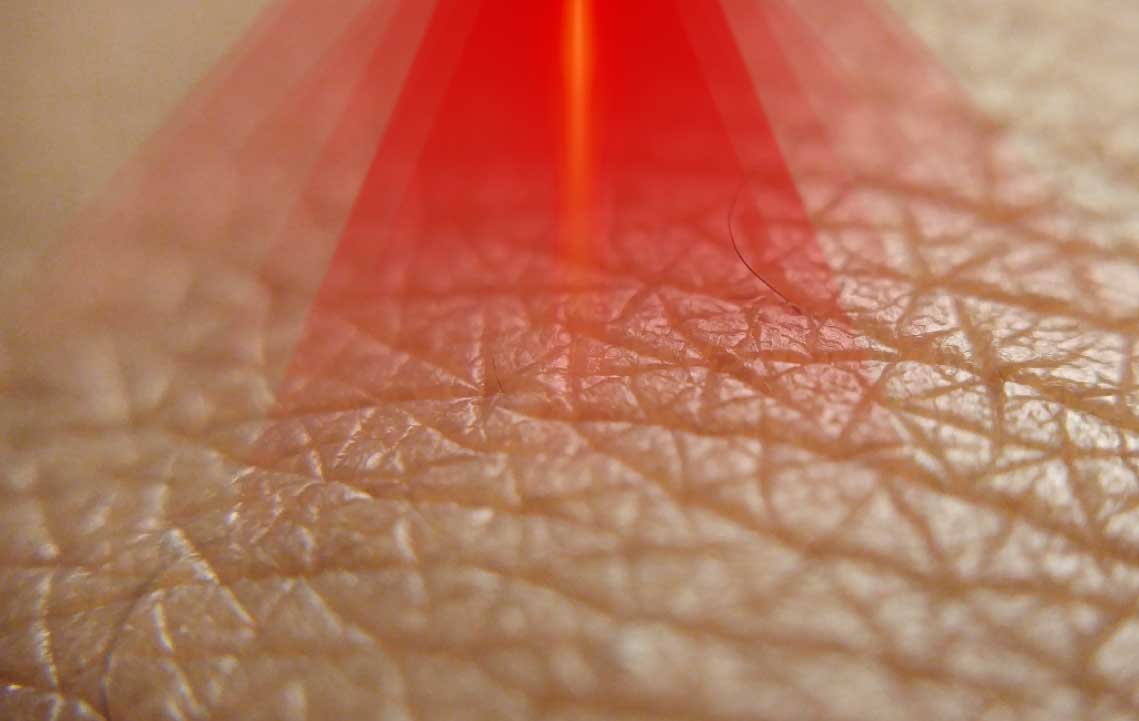
How to Choose a Dermatology Laser in 2026
A practical framework for evaluating dermatology laser platforms in 2026: wavelength selection, Fitzpatrick I-VI safety, pulse duration, total cost of ownership, and the questions to ask every vendor.
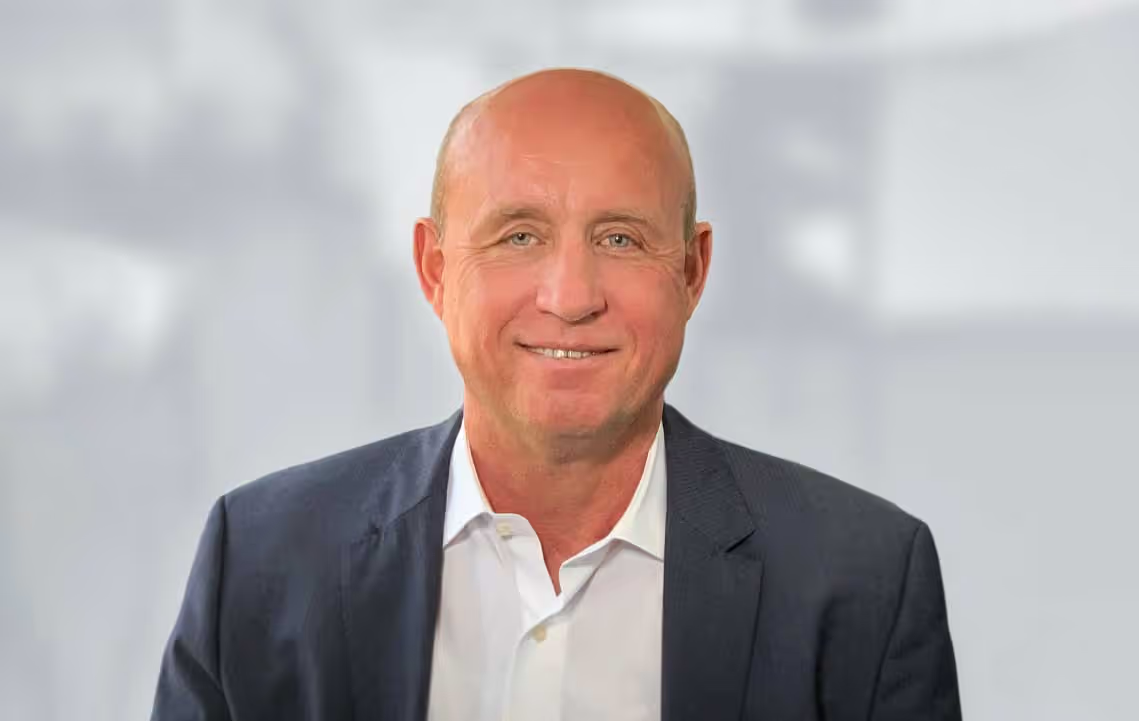
Thirty Years of Redefining Dermatological Laser Technology
Aerolase founder Pavel Efremkin shares the 30-year journey behind pioneering 650-microsecond pulse technology, transforming dermatological lasers with pain-free treatments safe for all skin types.

Aerolase Wins 2025 MedEsthetics Readers' Choice Awards: Neo Elite Named Best Acne Device, Era Elite Recognized for Laser Skin Resurfacing
Aerolase Neo Elite wins Best Acne Device and Era Elite named finalist for Best Laser Skin Resurfacing in 2025 MedEsthetics Readers' Choice Awards.