
How to Integrate Laser Intimate Wellness Treatments Into Your OBGYN or Aesthetic Practice

Here's something you probably already know but a topic we haven’t dedicated the appropriate time and resources toward: your patients are dealing with intimate health concerns they're not mentioning during appointments. The numbers are telling the story—up to 50% of women experience vaginal laxity after delivery1, and approximately 75% of postmenopausal women report symptoms affecting their intimate wellness2—yet fewer than 25% actually discuss these issues with their healthcare providers3. There’s a clear gap between what patients are experiencing and what they're comfortable asking about. This is where your practice and services can help.
Why Your Patients Need You to Bring This Up First
The uncomfortable truth is that your patients are suffering in silence. Women are Googling their intimate health concerns at 2 AM, reading forums, and trying everything from kegel exercises to YouTube tutorials—but they're not asking you about it.
Why? Because if you're not bringing it up, they assume it's not something you treat. They think it's "just part of aging" or "what happens after babies" and that nothing can be done. As we mentioned, 50% of women experience vaginal laxity after delivery, while approximately 75% of postmenopausal women report symptoms of genitourinary syndrome of menopause (GSM), including vaginal dryness, irritation, and painful intercourse2.
Whether due to the taboo nature of the subject or a feeling of embarrassment, women are avoiding this discussion with their providers. That's not because they don't want help—it's because they're waiting for permission to talk about it. And that permission needs to come from you.
The good news? The intimate wellness market is projected to reach $60 billion by 20304, which means patients are actively seeking solutions. They just need their trusted provider to meet them halfway.
What Services Actually Make Sense for Your Practice?
You don't need to become an intimate wellness specialist overnight. Start with treatments that naturally complement what you're already doing.
For OBGYN Practices:
Begin with non-surgical options that address the functional concerns your patients are already experiencing. Laser therapy using 1064nm wavelength technology treats stress urinary incontinence, vaginal laxity, and GSM symptoms through collagen remodeling—no surgery required5. Most patients need 3-4 sessions, and you're offering them a solution they didn't know existed for problems they thought they had to live with.
Think of it this way: you're already having postpartum visits and annual exams. These services are the natural next step in comprehensive care.
For Aestheticians and Med Spas:
If you're already treating faces and bodies, intimate area treatments are a logical extension. External vulvar rejuvenation, skin tone improvement, and addressing hyperpigmentation or textural concerns in intimate areas align perfectly with your existing body contouring and skin rejuvenation services.
Your clients are already comfortable with you treating sensitive areas. This is simply expanding the definition of comprehensive aesthetic care.
The Universal Starting Point:
Regardless of your practice type, begin with consultation-based assessments. These low-pressure conversations build trust, educate patients, and identify who's actually interested in treatment. No pressure, no awkwardness—just expanding the conversation about overall wellness.
The Conversation Starters That Actually Work
Stop waiting for patients to bring it up. They won't. Here's how to normalize these discussions without making anyone uncomfortable.
During Postpartum Visits: "Many of my patients notice changes in bladder control or intimate comfort after delivery. These are treatable conditions—would you like to discuss options that don't involve surgery?"
Simple. Direct. And it immediately signals that this is a normal conversation you have all the time.
During Annual Wellness Exams: "As part of comprehensive women's health, I always check in about intimate wellness. Are you experiencing any discomfort, dryness, or changes in sensation that affect your quality of life?"
Notice the framing: "I always check in" makes it standard care, not a special or embarrassing topic.
For Aesthetic Consultations: "Women often ask about addressing intimate area concerns alongside their facial or body treatments. This is a natural extension of overall wellness and confidence—is this something you'd be interested in learning about?"
You're normalizing the request before they even make it, which removes the barrier to asking.
The Secret Weapon: Clinical Language With Human Empathy
Research shows that patients respond best when providers use straightforward, clinical language while maintaining warmth and empathy6. Don't dance around the topic with euphemisms—that actually makes it more awkward. But also don't launch into medical jargon that creates distance.
Pro tip: Provide educational materials in your waiting room or via email that introduce intimate wellness topics before appointments. Let patients self-identify their concerns and come prepared with questions. You'd be surprised how many "I'm just here for my annual exam" appointments turn into engaged consultations when patients know you offer solutions.
Addressing the Questions You're Actually Wondering About
"Will patients think this is inappropriate or too sales-y?" Quite the opposite. Market research shows 68% of women are interested in non-surgical intimate wellness solutions when presented by trusted healthcare providers7. They're relieved that you're addressing something they were too uncomfortable to ask about. Your existing relationships give you credibility that online med spas and random practitioners can't match.
"How do I maintain my clinical credibility?" By treating intimate wellness exactly like any other medical service: grounded in evidence-based treatments with published clinical data. Position it as standard comprehensive care, not experimental or fringe medicine. When you normalize it, your patients will too.
"What about insurance and reimbursement?" Most intimate aesthetic procedures are self-pay, which actually makes billing simpler. However, treatments addressing functional concerns like stress urinary incontinence may qualify for insurance coverage when medically necessary and properly documented8. Check with major payers in your area, but don't let reimbursement questions stop you from offering services that genuinely help patients.
What Success Actually Looks Like
Track these metrics during your first year:
- Consultation conversion rates (how many consultations turn into treatments)
- Patient satisfaction scores
- Repeat treatment rates (are patients coming back for maintenance?)
- Referral generation (word-of-mouth is huge for this)
- Revenue per treatment
Most successful programs see 40-60% consultation-to-treatment conversion rates within six months as word-of-mouth referrals build. But here's the real indicator of success: patients thanking you for finally addressing something they've been struggling with for years.
The Real Reason to Add Intimate Wellness Services
Yes, there's a business case. Yes, it's a growing market. Yes, it can add significant revenue to your practice.
But the real reason to integrate intimate wellness? Your patients are suffering from treatable conditions and assuming nothing can be done. They're researching solutions from questionable sources, considering procedures from practitioners they don't know, and living with diminished quality of life—all while sitting in your waiting room.
You already have their trust. You already understand their medical history. You're already their go-to source for healthcare guidance.
All you need to do is start the conversation.
Women are actively seeking these solutions—they're simply waiting for their trusted healthcare provider to offer them. By integrating intimate wellness into your practice, you're not just expanding your service menu; you're providing comprehensive care that genuinely improves quality of life.
And honestly? Once you start these conversations, you'll wonder why you didn't do it sooner.
Intimate wellness solutions with new, real-world survey results on what women are looking for
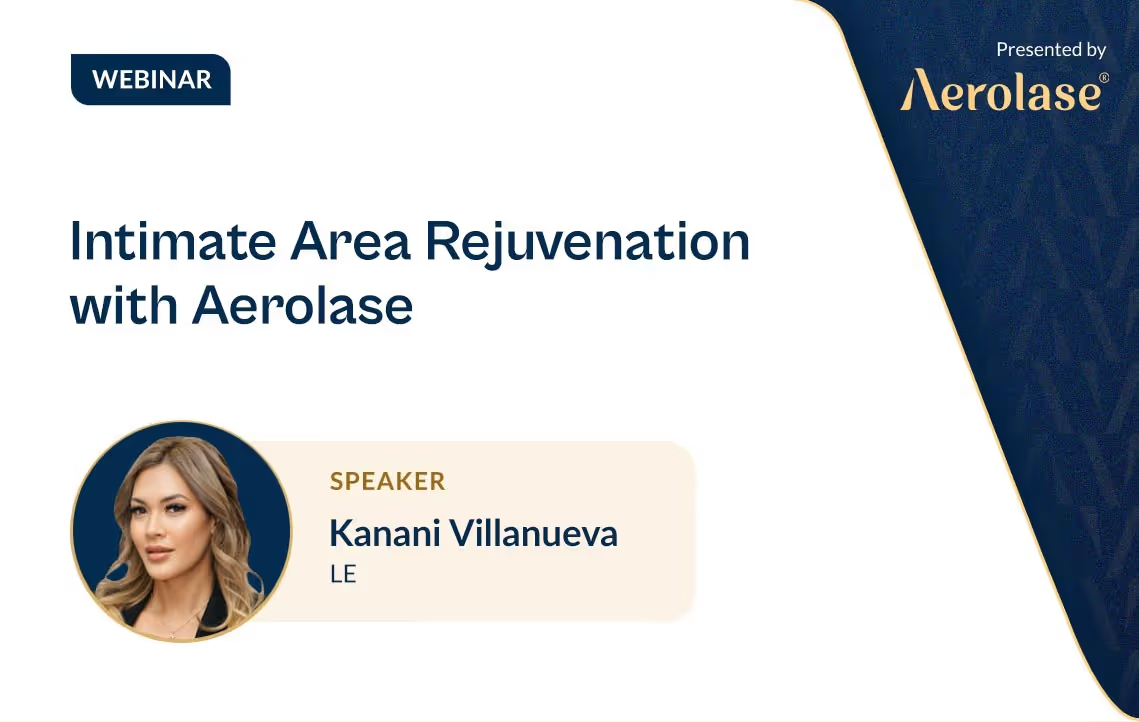
Watch Kanani Villanueva's full webinar, here.
The Neo Elite: Intimate Wellness Solution
For practices ready to start addressing intimate area concerns, the Aerolase Neo Elite offers a proven solution for vulvar rejuvenation and external intimate aesthetics. Using advanced 1064nm wavelength technology with uniquely gentle 650-microsecond pulse duration, the Neo Elite safely and effectively treats external intimate area concerns including skin tone irregularities, textural concerns, hyperpigmentation, and tissue quality improvement in the vulvar region.
The Neo Elite's tolerance-free technology makes it ideal for treating sensitive external intimate areas across all skin types without the discomfort or downtime associated with traditional approaches. Patients appreciate treatments that address their concerns without invasive procedures, and practitioners value a versatile platform that extends their service offerings into this growing market segment.
References
- Gutman RE, Ford DE, Quiroz LH, Shippey SH, Handa VL. Postpartum pelvic floor dysfunction. American Journal of Obstetrics & Gynecology. 2008;199(3):301.e1-301.e7. doi:10.1016/j.ajog.2008.04.032
- American College of Obstetricians and Gynecologists. "Genitourinary Syndrome of Menopause." ACOG Practice Bulletin No. 141, 2021
- Sobecki JN, Curlin FA, Rasinski KA, Lindau ST. What we don't talk about when we don't talk about sex: results of a national survey of U.S. obstetrician/gynecologists. Journal of Sexual Medicine. 2012;9(5):1285-1294. doi:10.1111/j.1743-6109.2012.02702.x
- Allied Market Research. "Feminine Intimate Care Market Size, Share & Trends Analysis Report by Product Type, by Distribution Channel: Global Opportunity Analysis and Industry Forecast, 2021-2030". Published 2021.
- Gaspar A, Brandi H, Gomez V, Luque D. Efficacy of Erbium:YAG laser treatment compared to topical estriol treatment for symptoms of genitourinary syndrome of menopause. Lasers in Surgery and Medicine. 2017;49(2):160-168. doi:10.1002/lsm.22569
- Roter DL, Hall JA, Aoki Y. Physician gender effects in medical communication: a meta-analytic review. Journal of Women's Health. 2002;288(6):756-764. doi:10.1001/jama.288.6.756
- Grand View Research. "Feminine Intimate Care Market Size, Share & Trends Analysis Report By Product (Washes, Oils), By Distribution Channel (Supermarkets, Online), By Region, And Segment Forecasts, 2023-2030." Published 2023.
- International Urogynecological Association. "IUGA Clinical Guidelines on Conservative Treatment of Urinary Incontinence". Published 2019.
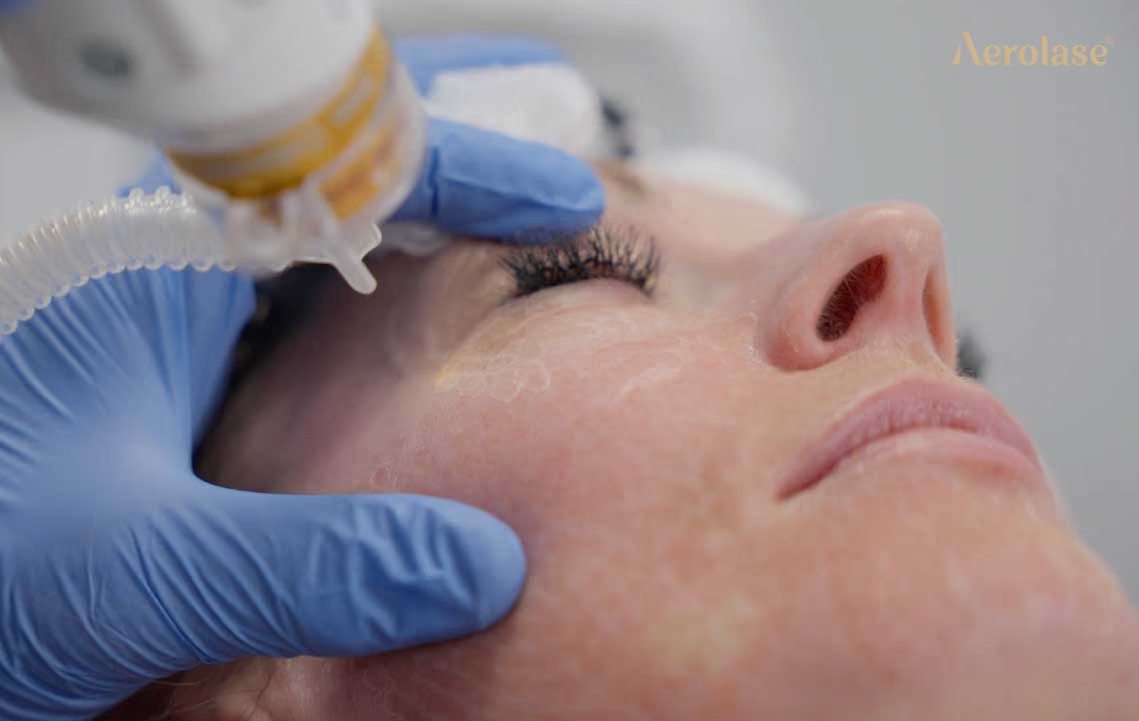
Treating Crow's Feet and Perioral Lines with Precision: Dr. James Gordon on the Era Elite 6mm Lens
Oculoplastic surgeon Dr. James Gordon explains how the Aerolase Era Elite 6mm lens delivers targeted 2940nm Er:YAG resurfacing for crow's feet and perioral lines.

Aerolase Skin Health Summit | Toronto Recap
Aerolase hosted its inaugural Skin Health Summit in Toronto, bringing together leading physicians, aesthetic practitioners, and industry experts for a day of education, live laser demonstrations, and clinical collaboration.

How Hybrid Fractional Resurfacing Treats Acne Scars: A Clinical Walkthrough with Dr. James Gordon
Oculofacial Plastic Surgeon Dr. James Gordon explains how the Aerolase Era Elite hybrid fractional lens disrupts fibrotic scar tissue and stimulates collagen — and what practitioners and patients should know about the treatment.