
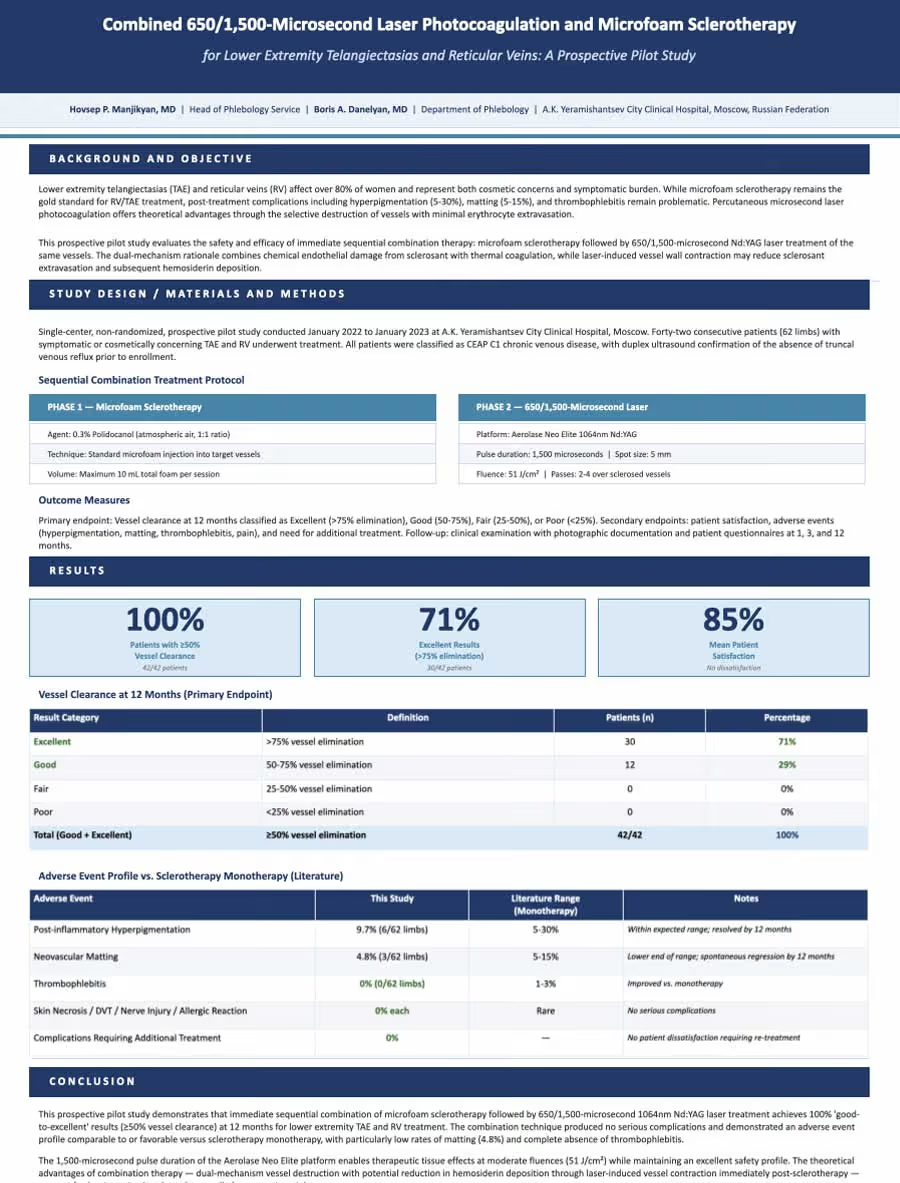
Combined 650/1,500-Microsecond Laser Photocoagulation and Microfoam Sclerotherapy for Lower Extremity Telangiectasias and Reticular Veins: A Prospective Pilot Study
Hovsep P. Manjikyan, MD | Head of Phlebology Service | Boris A. Danelyan, MD | Department of Phlebology | A.K. Yeramishantsev City Clinical Hospital, Moscow, Russian Federation
Background and Objective
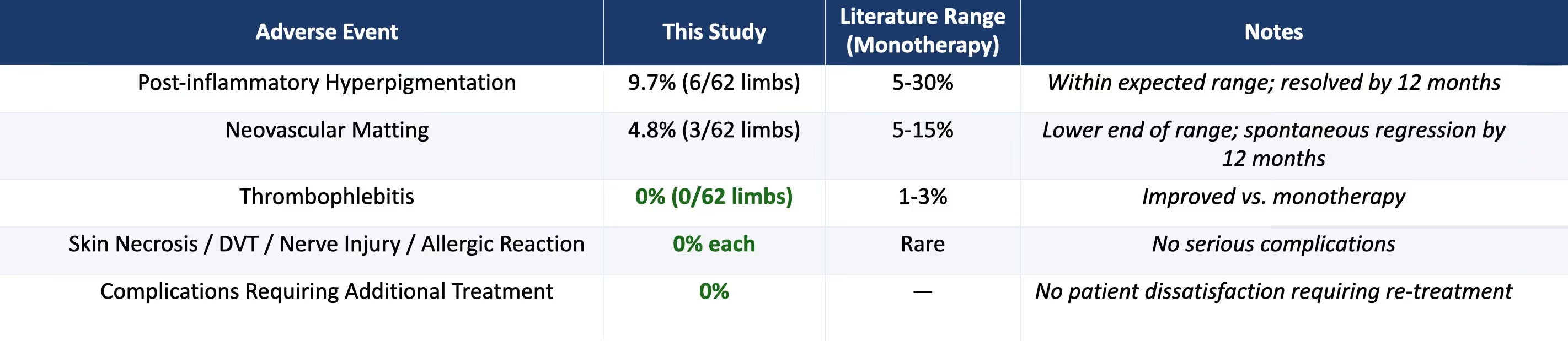
Lower extremity telangiectasias (TAE) and reticular veins (RV) affect over 80% of women and represent both cosmetic concerns and symptomatic burden. While microfoam sclerotherapy remains the gold standard for RV/TAE treatment, post-treatment complications including hyperpigmentation (5-30%), matting (5-15%), and thrombophlebitis remain problematic. Percutaneous microsecond laser photocoagulation offers theoretical advantages through the selective destruction of vessels with minimal erythrocyte extravasation.
This prospective pilot study evaluates the safety and efficacy of immediate sequential combination therapy: microfoam sclerotherapy followed by 650/1,500-microsecond Nd:YAG laser treatment of the same vessels. The dual-mechanism rationale combines chemical endothelial damage from sclerosant with thermal coagulation, while laser-induced vessel wall contraction may reduce sclerosant extravasation and subsequent hemosiderin deposition.
Study Design / Materials and Methods
Single-center, non-randomized, prospective pilot study conducted January 2022 to January 2023 at A.K. Yeramishantsev City Clinical Hospital, Moscow. Forty-two consecutive patients (62 limbs) with symptomatic or cosmetically concerning TAE and RV underwent treatment. All patients were classified as CEAP C1 chronic venous disease, with duplex ultrasound confirmation of the absence of truncal venous reflux prior to enrollment.
Sequential Combination Treatment Protocol
Phase 1:
Microfoam Sclerotherapy
Agent: 0.3% Polidocanol (atmospheric air, 1:1 ratio)
Technique: Standard microfoam injection into target vessels
Volume: Maximum 10 mL total foam per session
Phase 2:
650/1,500-Microsecond Laser
Platform: Aerolase Neo Elite 1064nm Nd:YAG
Pulse duration: 1,500 microseconds | Spot size: 5 mm
Fluence: 51 J/cm² | Passes: 2-4 over sclerosed vessel
Outcome Measures
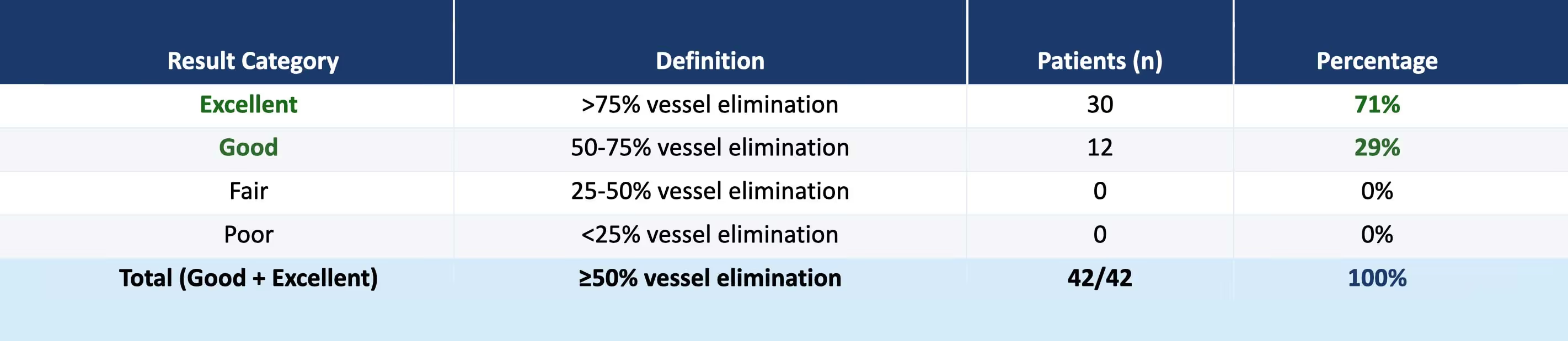
Primary endpoint: Vessel clearance at 12 months classified as Excellent (>75% elimination), Good (50-75%), Fair (25-50%), or Poor (<25%). Secondary endpoints: patient satisfaction, adverse events (hyperpigmentation, matting, thrombophlebitis, pain), and need for additional treatment. Follow-up: clinical examination with photographic documentation and patient questionnaires at 1, 3, and 12 months.
Results
100% Patients with ≥50% Vessel Clearance (42/42 patients)
71% Excellent Results (>75% elimination) (30/42 patients)
85% Mean Patient Satisfaction (No dissatisfaction)
Vessel Clearance at 12 Months (Primary Endpoint)
Adverse Event Profile vs. Sclerotherapy Monotherapy (Literature)
Conclusion
This prospective pilot study demonstrates that immediate sequential combination of microfoam sclerotherapy followed by 650/1,500-microsecond 1064nm Nd:YAG laser treatment achieves 100% 'good-to-excellent' results (≥50% vessel clearance) at 12 months for lower extremity TAE and RV treatment. The combination technique produced no serious complications and demonstrated an adverse event profile comparable to or favorable versus sclerotherapy monotherapy, with particularly low rates of matting (4.8%) and complete absence of thrombophlebitis.
The 1,500-microsecond pulse duration of the Aerolase Neo Elite platform enables therapeutic tissue effects at moderate fluences (51 J/cm²) while maintaining an excellent safety profile. The theoretical advantages of combination therapy — dual-mechanism vessel destruction with potential reduction in hemosiderin deposition through laser-induced vessel contraction immediately post-sclerotherapy — warrant further investigation through controlled comparative trials.
Study Limitations
This pilot study lacks a control arm (sclerotherapy alone or laser alone), randomization, and independent outcome assessment. The single-center design and relatively small sample size (42 patients, 62 limbs) limit generalizability. Standardized vessel clearance grading scales and validated quality-of-life instruments would enhance the reliability of future studies. The optimal timing, laser parameters, and patient selection criteria for combination therapy remain undefined.
Future Directions
Randomized controlled trials comparing combination therapy versus sclerotherapy monotherapy and laser monotherapy are needed to establish definitive efficacy, cost-effectiveness, and optimal patient selection. Investigating alternative sequencing (laser-first versus sclerosant-first) and varying time intervals between treatments may further optimize outcomes.
Keywords: Telangiectasia | Reticular veins | Sclerotherapy | Nd:YAG laser | Microsecond pulse | Combination therapy | Aerolase Neo | Lower extremity | CEAP C1 | Microfoam sclerotherapy
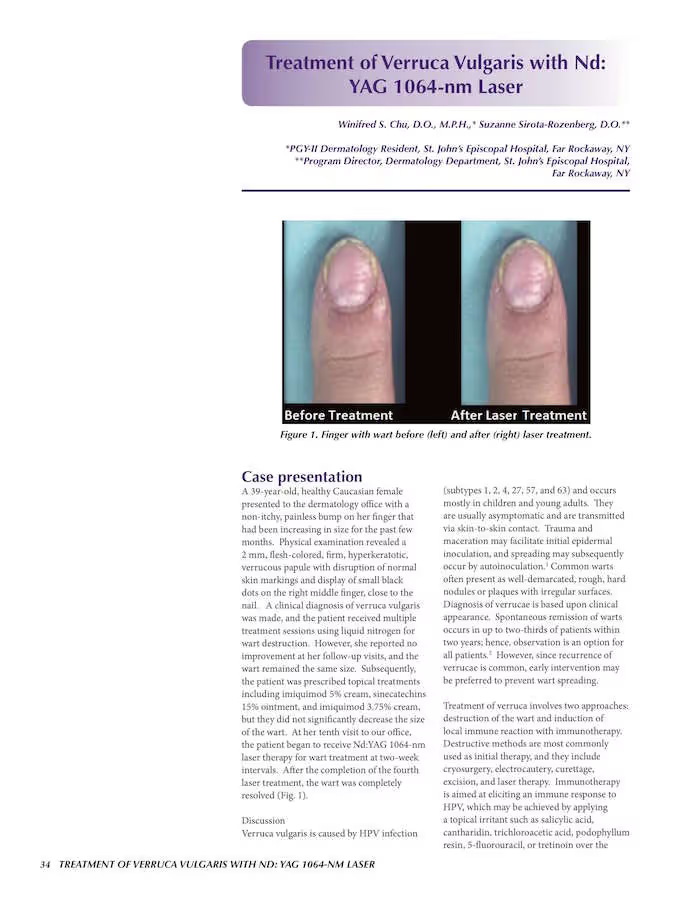
Treatment of Verruca Vulgaris with Nd:YAG 1064nm Laser
The Nd:YAG 1064-nm laser treatment involves the delivery of laser light irradiation at wavelength 1064 nm, which allows deeper penetration into thicker tissue compared to shorter-wavelength lasers without direct skin or verruca contact.