
Aesthetic Laser Platform Guide for All Skin Types
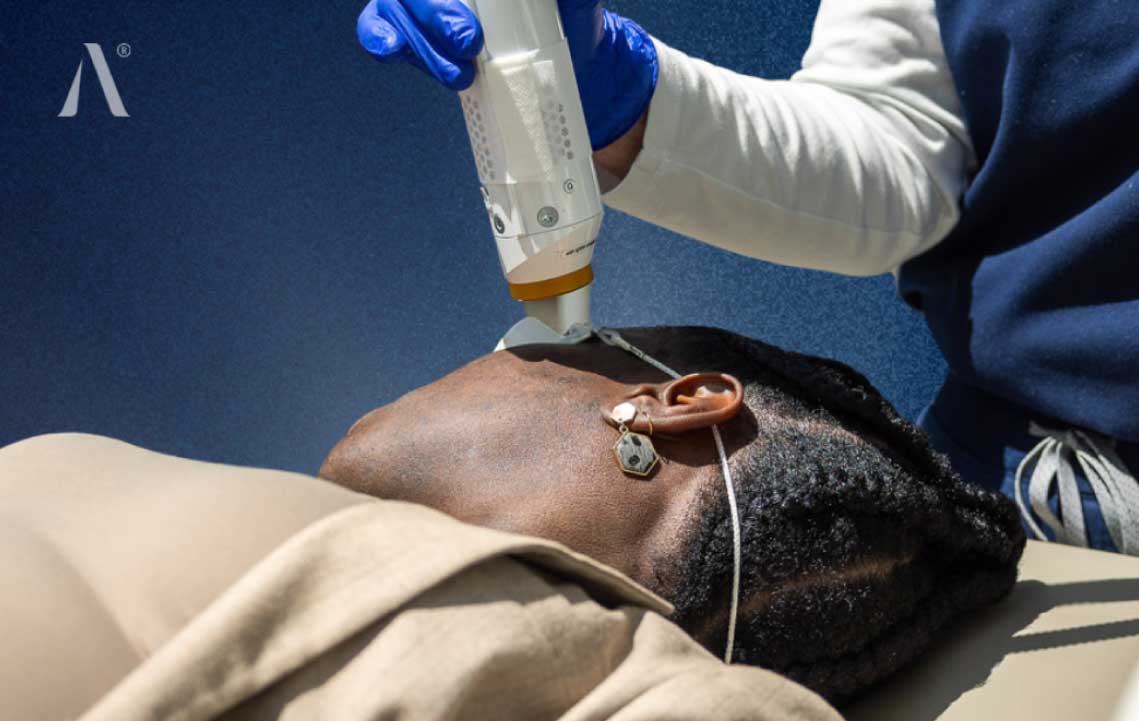
Melanin does not care what a device brochure says. It is a competing chromophore, and in the epidermis it absorbs laser energy intended for a deeper target, increasing the risk of adverse events from epidermal injury in more darkly pigmented skin. The standard mitigation is to lower fluence, which protects the epidermis and reduces efficacy at the same time. Practices then run more sessions for softer results, and patients understandably disengage.
This guide covers the clinical side of that problem: which device parameters govern safety across Fitzpatrick I through VI, what the published adverse event data actually reports, and how to verify a manufacturer's skin type claims before you commit. If you are earlier in the process and working through budget, ROI, and vendor selection, start with our guide on how to choose a dermatology laser in 2026 and return here for the phototype-specific evaluation.
Why skin type is a device problem, not a settings problem
Every laser can be made safe for Fitzpatrick VI by turning the energy down far enough. The question is whether it remains effective at that setting.
This is the distinction most evaluations miss. Vendors demonstrate safety at one parameter set and efficacy at another, and the two are rarely the same. In practice a device either has enough separation between its therapeutic threshold and its epidermal injury threshold to treat melanin-rich skin at working parameters, or it does not. That separation is determined at the engineering level, by wavelength and pulse structure, not by operator technique.
Operator skill matters enormously. It cannot manufacture a therapeutic window that physics does not provide.
How to profile your patient panel before evaluating any platform
Start with your own chart data
Pull the last 12 months and quantify four things:
- Distribution of Fitzpatrick skin types across your active panel
- Top 10 presenting concerns by volume, segmented by skin type
- Conditions you currently refer out or decline
- Cases where you chose a more conservative modality specifically because of skin type
The fourth item is the one that matters. It is your unmet clinical demand, and in most practices it is larger than expected, because the decisions were made individually at the chair and never aggregated.
Where the Fitzpatrick scale falls short
Fitzpatrick was developed in 1972 to classify ultraviolet response, based on burning and tanning tendency. It was never designed to quantify constitutive melanin for laser dosimetry. It remains the operational shorthand across the literature and device labeling, so you will evaluate platforms against it, but treat it as a floor rather than a ceiling.
Patients within the same phototype vary substantially, which is why nearly all surveyed dermatologists cite darker skin type as the leading factor in deciding to perform a test spot. Recent ancestry, tanning status, and hormonal or medication-driven pigment lability all shift risk within a single phototype label.
A platform that requires a careful test spot protocol is not disqualified. A platform that requires you to abandon efficacious settings entirely is.
The four device parameters that determine skin type safety
Wavelength
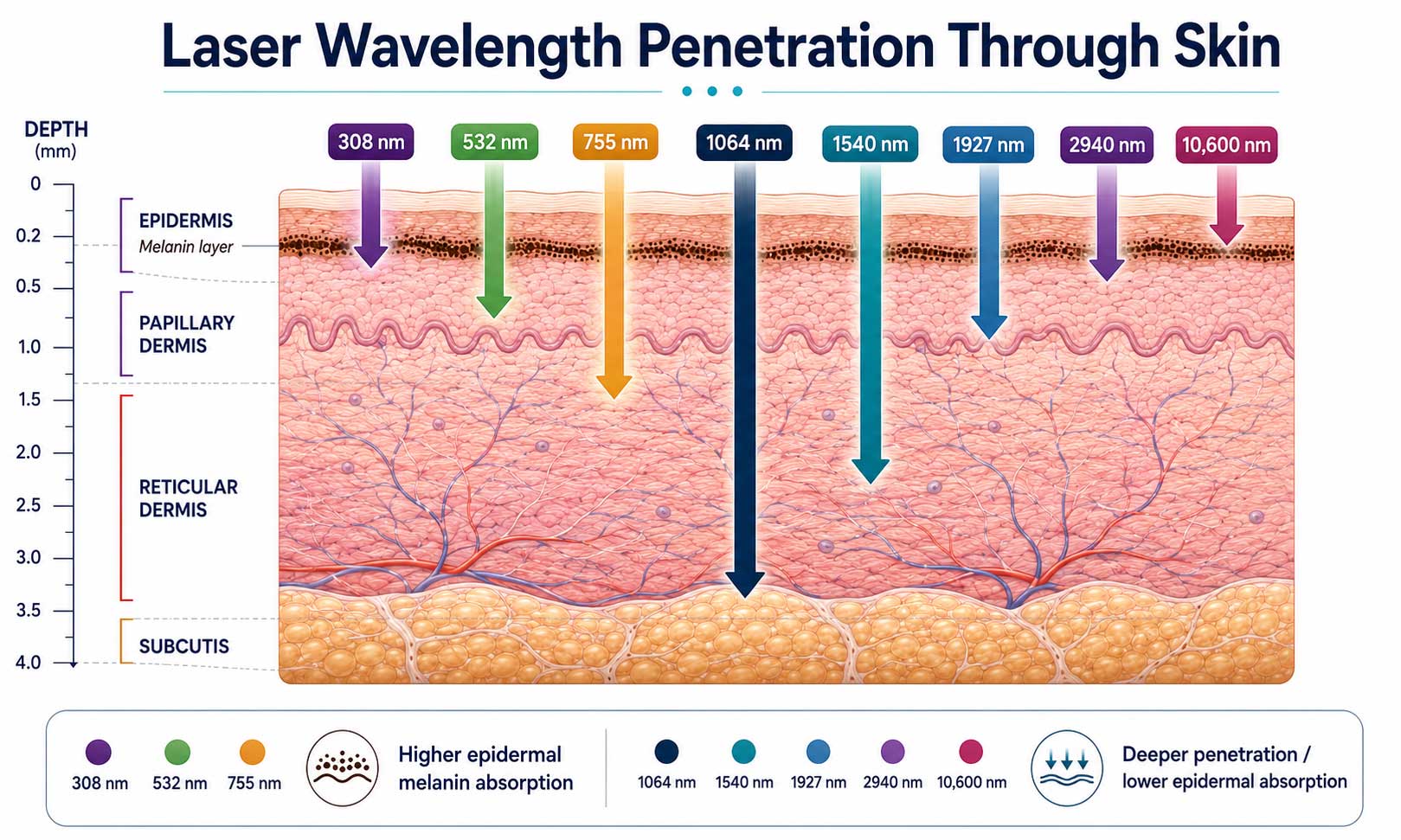
Longer wavelengths penetrate deeper and are absorbed less by epidermal melanin. This is why 1064 nm Nd:YAG and 810 nm devices are consistently recommended for Fitzpatrick V and VI, while shorter-wavelength systems and broadband intense pulsed light carry higher epidermal risk in melanin-rich skin.
Ablative erbium:YAG at 2940 nm changes the equation entirely by targeting water rather than melanin. Chromophore competition stops being the governing variable and ablation depth and residual thermal footprint take over.
For dermal pigment specifically, Q-switched and picosecond systems have an established role, with 1064 nm strongly preferred over 532 nm in darker phototypes.
Pulse duration and thermal relaxation time
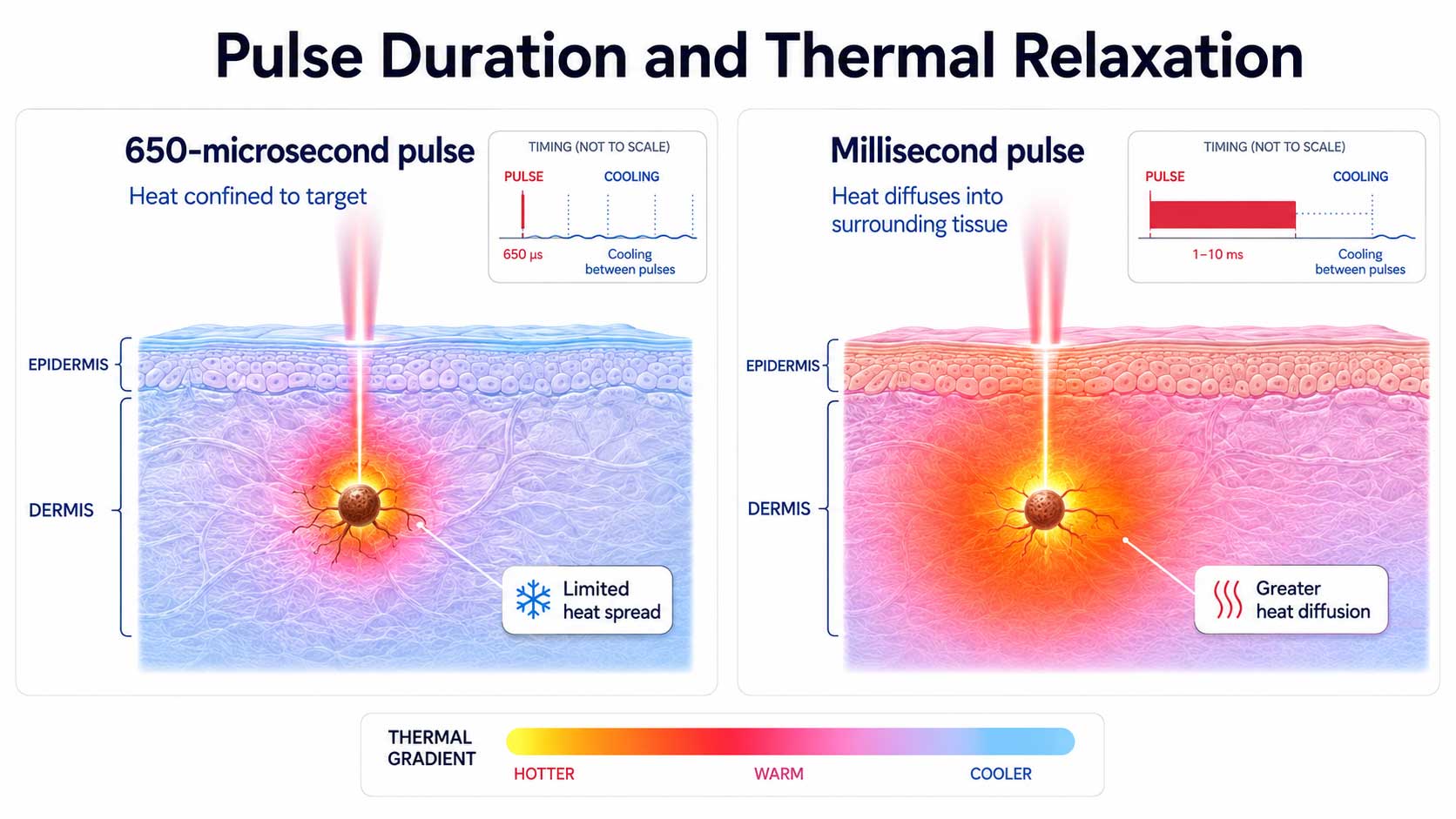
Thermal relaxation time is the interval a heated structure needs to dissipate roughly half its heat. When pulse duration stays within the relaxation time of the intended target, energy is confined to that target and surrounding tissue, including the epidermis, cools between pulses. When pulses run long, into the millisecond range, heat diffuses outward and epidermal thermal load rises. In pigmented skin, where the epidermis is already absorbing more of the incident energy, that diffusion is what produces blistering, crusting, and subsequent dyspigmentation.
Ask for pulse duration in absolute units for every handpiece and every indication. A range in a brochure is not an answer.
Fluence and the efficacy compromise
The standard risk mitigation for darker phototypes is lower fluence, longer pulse duration, or reduced treatment density, and higher energy correlates with higher rates of post-inflammatory hyperpigmentation in Fitzpatrick IV through VI.
So the useful question to a vendor is never "is this safe for skin of color." It is: what fluence do you recommend for a Fitzpatrick V patient with this indication, and what outcome data exists at that specific setting?
Cooling and delivery method
Contact cooling, cryogen spray, forced air, and non-contact delivery each produce different epidermal thermal profiles. Cooling is not automatically protective. One systematic review of PIH prevention in skin of colour found sunscreen was the only measure that consistently prevented PIH incidence, while cooling air devices exacerbated PIH development in the studies reviewed.
Ask what the cooling mechanism is, when in the pulse cycle it operates, and what evidence supports it in darker skin specifically.
What the adverse event data shows for Fitzpatrick IV through VI
Two findings should set your expectations.
The pooled analysis by Hu, Atmakuri, and Rosenberg in Aesthetic Surgery Journal found that the overall adverse event rate for nonablative laser and energy-based therapies in Fitzpatrick IV to VI is low, but PIH incidence is not insignificant, with higher energy levels correlating with higher PIH rates.
A 2024 systematic review reported that laser carries an 11% to 17% rate of inducing PIH with repeated procedures, especially in darker skin types. The same review found laser was the only intervention studied that produced complete resolution of PIH in a subgroup of patients.
Both things are true at once. Lasers are effective in skin of color and they are the leading iatrogenic cause of the pigmentary problem they treat. The margin between those outcomes is device selection and parameter discipline.
Worth noting for context: adverse events are inconsistently reported across the literature, and much of the published safety record in darker skin comes from studies conducted by experienced laser practitioners using adjunctive protocols. Your real-world rate depends on who is holding the handpiece.
How to verify a manufacturer's "safe for all skin types" claim
Read the 510(k), not the brochure
Nearly all aesthetic lasers are Class II devices cleared through the 510(k) premarket notification pathway. Clearance is a determination of substantial equivalence to a predicate device. It is not an endorsement, clinical data is often not required to obtain it, and in this pathway devices are cleared for marketing, not approved, and may not be marketed as approved by FDA.
Search the device by name or applicant in the FDA releasable 510(k) database and read the indications for use verbatim. If a rep described an application that does not appear there, you are being pitched off-label use, which manufacturers may not promote.
Note what clearance does not cover: it does not certify performance in any specific phototype. There is no such thing as being "FDA cleared for all skin types" in the sense the phrase implies.
Request phototype-stratified evidence
Ask for four things in writing:
- Peer-reviewed publications with Fitzpatrick IV to VI cohorts, not pooled I to VI populations
- Adverse event rates broken out by phototype, including PIH, hypopigmentation, and scarring
- The treatment parameters used in those studies, so you can confirm the efficacy claims and safety claims come from the same settings
- Investigator affiliations and funding source
A platform with genuine skin of color evidence produces this in a day. A platform without it offers testimonials and a gallery.
Separate device performance from protocol dependence
Much of the published safety record in darker skin depends on adjunctive care: pre- and post-treatment topicals, strict photoprotection, test spots, extended intervals. Pre- and post-treatment with bleaching agents reduces PIH risk, particularly after resurfacing.
Confirm whether the outcomes you are shown reflect the device alone or the device plus a protocol your staff will have to enforce on every patient, indefinitely.
Building protocols that protect darker phototypes
Device selection sets your ceiling. Protocol determines whether you reach it.
Test spots
Use them in an inconspicuous area at intended treatment parameters, and wait long enough for delayed pigmentary response to appear rather than reading at 24 hours. Document the settings, the site, and the interval. This is standard practice among laser-experienced dermatologists and it is the cheapest risk control available.
Pre- and post-treatment regimen
Build a written standing protocol rather than deciding case by case. Photoprotection is the single measure with the most consistent supporting evidence for PIH prevention. Topical preparation, treatment interval discipline, and clear post-care instructions carry most of the remaining risk reduction. Interval discipline matters especially: treating through unresolved inflammation is a reliable way to produce the pigment you were hired to remove.
Consent and documentation
Consent for laser treatment in Fitzpatrick IV to VI should name dyspigmentation explicitly, both hyper- and hypopigmentation, and state that PIH is typically transient but can persist for months. Standardize photography: consistent lighting, fixed distance, documented interval, phototype recorded. Inconsistent before-and-after imagery is a liability in a complication review and it is also why so much of the marketing in this category is untrustworthy.
Twelve questions to ask before you commit:
- What is the exact wavelength and pulse duration for each handpiece and indication?
- What fluence do you recommend for a Fitzpatrick V patient with this indication?
- What published outcome data exists at that specific setting?
- What is the 510(k) number, and what are the verbatim indications for use?
- Which peer-reviewed studies include a Fitzpatrick IV to VI cohort?
- What are the reported PIH, hypopigmentation, and scarring rates by phototype?
- Were those outcomes achieved with adjunctive topical protocols, and which ones?
- What is the cooling mechanism, and what evidence supports it in darker skin?
- What is your recommended test spot protocol and read interval?
- What is the recommended treatment interval for Fitzpatrick V and VI, and how does it differ from I to III?
- Which conditions on my current referral-out list does this platform address at working parameters?
- Can I speak with three practices treating a predominantly skin of color panel with this device?
Where Aerolase fits
Aerolase engineered its platforms around the parameters described above. The Neo Elite is a 1064 nm Nd:YAG system with a 650-microsecond pulse duration, designed to deliver energy within the thermal relaxation time of the target while limiting epidermal heat accumulation, using non-contact delivery.
The Era Elite is a 2940 nm Er:YAG resurfacing platform with a 300-microsecond pulse and adjustable ablation depth, giving control over thermal effect from superficial peel through deeper resurfacing. Because the two target different depths and different chromophores, many practices run them in combination to address dermis and epidermis in one visit.
Clinical outcomes across phototypes are documented in the before-and-after gallery, and the acne indication has the deepest published dataset.

References
- StatPearls. Laser Fitzpatrick Skin Type Recommendations. NCBI Bookshelf.
- Hu S, Atmakuri M, Rosenberg J. Adverse events of nonablative lasers and energy-based therapies in subjects with Fitzpatrick skin phototypes IV to VI: a systematic review and meta-analysis. Aesthetic Surgery Journal. 2022;42(5):537-547.
- Alexis AF. Lasers and light-based therapies in ethnic skin: treatment options and recommendations for Fitzpatrick skin types V and VI. British Journal of Dermatology. 2013;169(Suppl 3):91-97.
- Mar K, Khalid B, Maazi M, et al. Treatment of post-inflammatory hyperpigmentation in skin of colour: a systematic review. Journal of Cutaneous Medicine and Surgery. 2024.
- Mar K, Maazi M, Khalid B, et al. Prevention of post-inflammatory hyperpigmentation in skin of colour: a systematic review. Australasian Journal of Dermatology. 2025.
- Review of laser treatments for post-inflammatory hyperpigmentation in skin of color. American Journal of Clinical Dermatology. 2023.
- Complications of dermatologic lasers in high Fitzpatrick phototypes and management: an updated narrative review. Lasers in Medical Science. 2024.
- De La Garza H, Lazar M, Visutjindaporn P, Vashi NA. Adverse events associated with 1540-nm nonablative fractional resurfacing in darker skin. JAAD International. 2023.
- Garg S, Vashisht KR, Garg D, et al. Advancements in laser therapies for dermal hyperpigmentation in skin of color. Journal of Clinical Medicine. 2024;13(7):2116.
- Wang JY, Kabakova M, et al. Factors influencing laser test spot practices among dermatologists. Archives of Dermatological Research. 2025.
- U.S. Food and Drug Administration. Premarket Notification 510(k) and Search the Releasable 510(k) Database.
- Institute of Medicine. Public Health Effectiveness of the FDA 510(k) Clearance Process. NCBI Bookshelf.

Longer wavelengths are preferred because they penetrate deeper and are absorbed less by epidermal melanin. The 1064 nm Nd:YAG is the most consistently recommended wavelength in the literature for darker phototypes, alongside 810 nm for hair reduction and 308 nm excimer for targeted phototherapy. Wavelength alone is not sufficient. Pulse duration, fluence, and delivery method determine the actual risk profile.
No. Most aesthetic lasers are Class II devices cleared through the 510(k) pathway, which establishes substantial equivalence to a predicate device rather than independently demonstrating safety or efficacy. Clearance often requires no clinical data and does not certify performance in any specific phototype. Read the cleared indications for use and request phototype-stratified evidence separately.
Published rates vary by device, indication, and settings. Systematic review data reports an 11% to 17% rate of laser-induced PIH with repeated procedures in darker skin types. Pooled analyses of nonablative devices in Fitzpatrick IV to VI find a low overall adverse event rate with a non-trivial PIH incidence that rises with higher energy. Risk is manageable through device selection, conservative parameters, test spots, treatment interval discipline, and strict photoprotection.
Only partially. Fitzpatrick was designed in 1972 to classify ultraviolet response, not to quantify melanin for laser dosimetry. Patients within the same phototype vary considerably in constitutive pigment, tanning status, and pigment lability. Use it as a starting point and confirm with a test spot, which nearly all surveyed dermatologists identify darker skin type as the leading reason to perform.
Yes, with conservative depth, reduced density, disciplined intervals, and pre- and post-treatment topical protocols. Erbium:YAG at 2940 nm targets water rather than melanin, which removes chromophore competition as the governing risk. Depth control and residual thermal effect become the variables to manage, and adverse event rates rise with aggressiveness rather than with phototype alone.
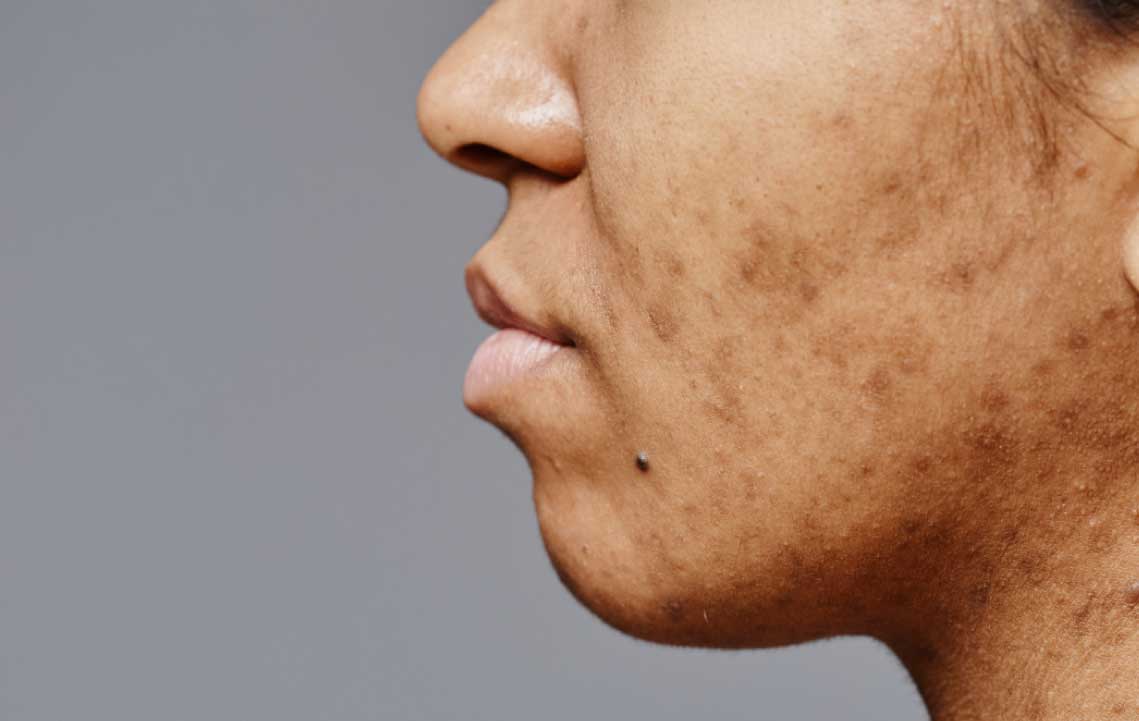
PIH Risk in Laser Treatment for Dark Skin
Post-inflammatory hyperpigmentation is the top risk in treating Fitzpatrick IV–VI skin. See how PIH shapes laser choice and why 1064 nm Nd:YAG is safer.
Antibiotic-Sparing Acne Treatment: Why Energy-Based Devices Are Gaining Ground in 2026
Antibiotic resistance is reshaping acne protocols. See why dermatologists are adding energy-based devices like Aerolase's 1064nm Nd:YAG as an antibiotic-sparing option safe across all skin types.
Rethinking the Acne Cascade: From Trigger to Clearance
Acne vulgaris isn't just a bacterial problem. Explore the full inflammatory cascade behind acne — and why targeting it early produces more durable clinical outcomes.